
Portfolio vs. landing page: why they serve different goals
A portfolio is for impressing people who already know they want 3D work done. A landing page is for converting people who are still deciding. These are fundamentally different jobs, and trying to do both with one page usually means doing neither well.
Most 3D artists build a portfolio site on Behance, ArtStation, or a custom domain and then wonder why inquiries are sparse even when the work is excellent. The portfolio answers "can this person make great renders?" - yes, clearly. But it doesn't answer the questions that actually drive the decision to reach out: "Does this person work with clients like me? What do I actually get? How much does it cost? What happens when I contact them?"
A landing page answers all of those questions in order, for a specific type of client, and ends with one clear action. That structure is why focused landing pages consistently outperform portfolio sites at generating inquiries from cold traffic.
Real example: evercgi.com
The page below is EVERCGI's landing page, built with lander.rs. View it live at evercgi.com.
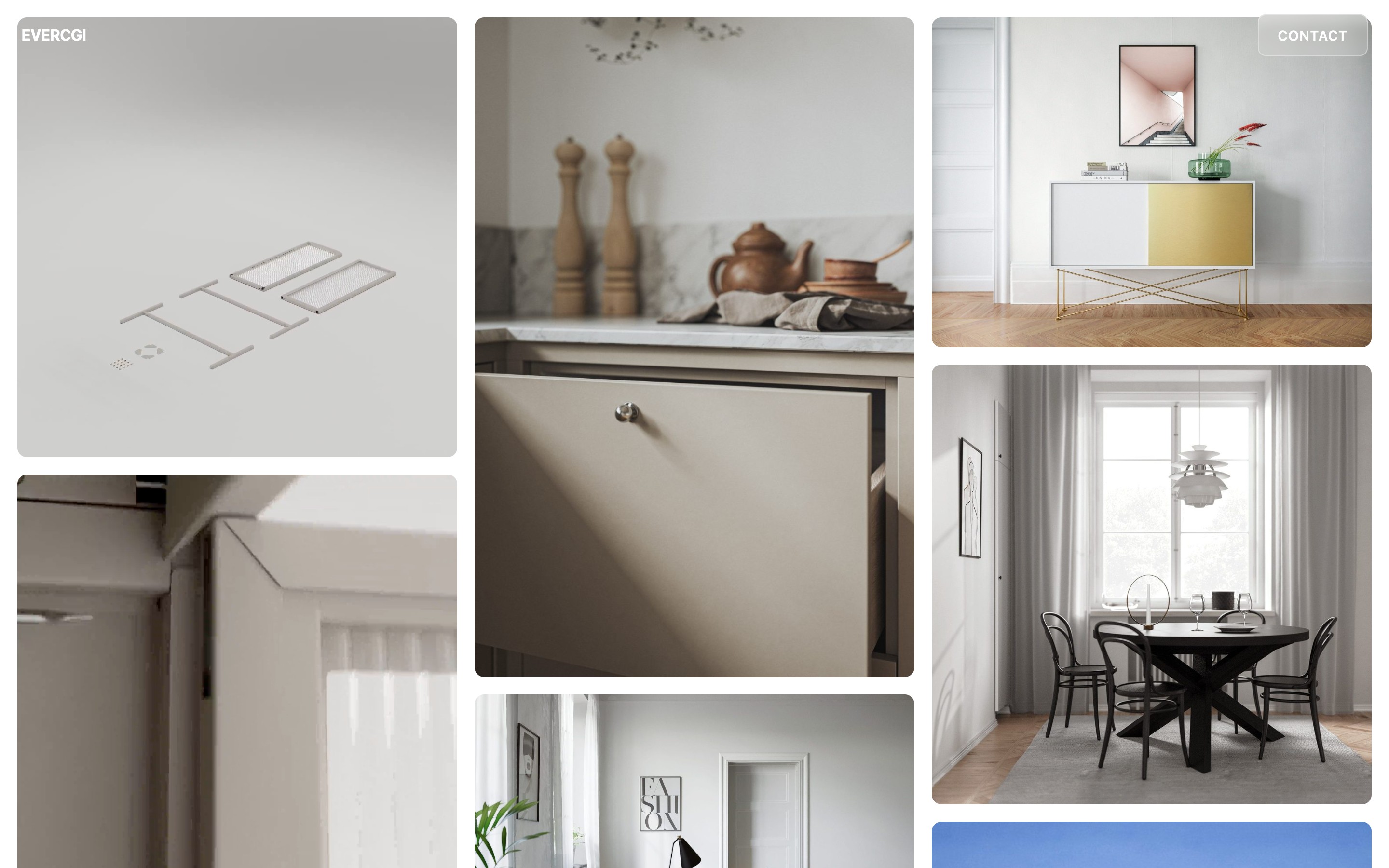
EVERCGI provides 3D visualization and CGI services - the kind of work architects, real estate developers, and product companies need when they want photorealistic renders of something that doesn't exist yet. Their landing page leads with a specific offer for a specific client, not a gallery of everything they've ever made.
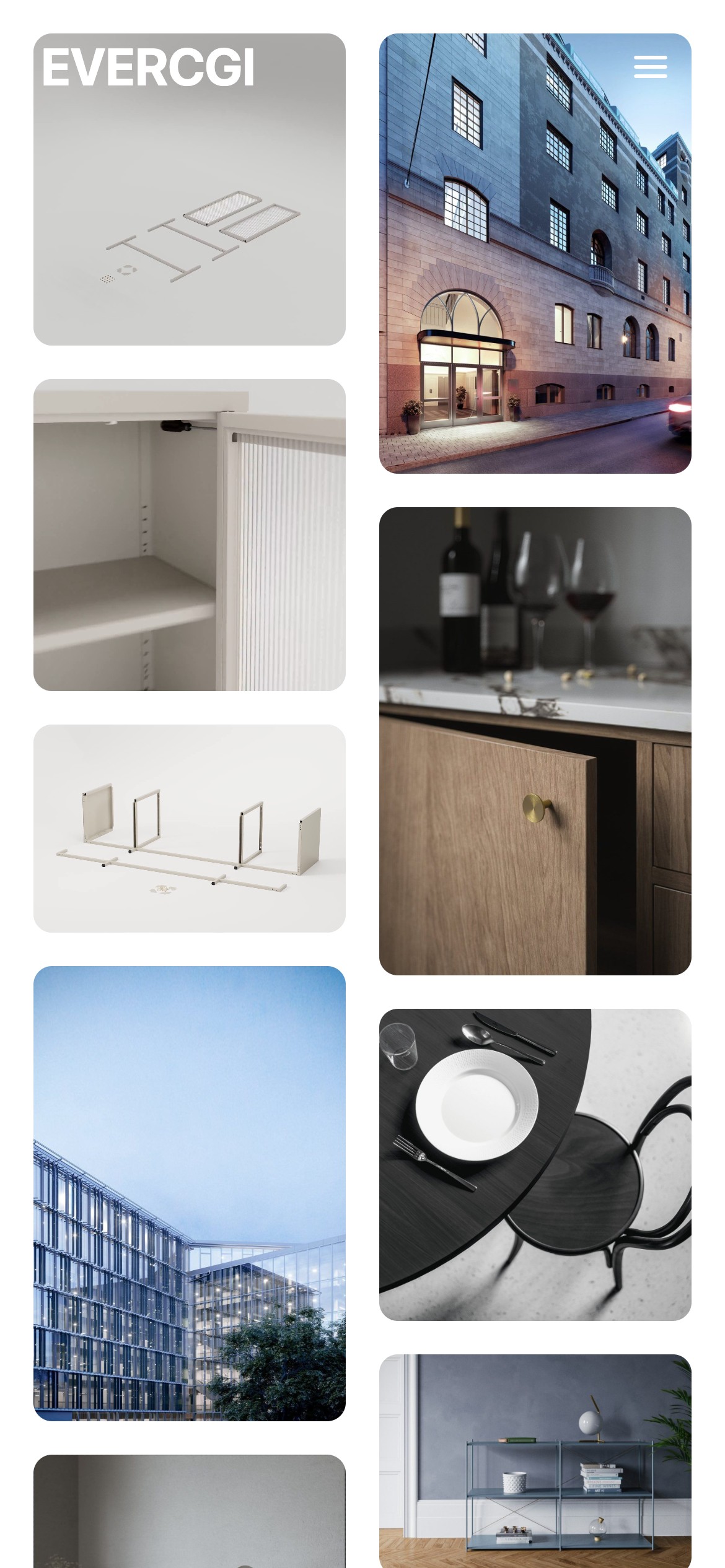
Mobile - the offer and CTA are immediately visible without scrolling
The power of committing to one offer
3D artists are usually capable of a wide range of work - architectural visualization, product rendering, character modeling, VFX, motion graphics. Listing everything you can do tells a prospective client that you're available, not that you're the right choice for their specific need.
The clients who convert fastest are the ones who arrive with a specific problem and immediately see that you solve exactly that problem. An architect looking for visualization renders of an unbuilt project will move much faster on a page that says "Architectural CGI that sells projects before they're built" than on a page that says "3D art, renders, motion, VFX, and more."
This doesn't mean you have to turn away other work. It means your landing page is focused on the highest-value, most repeatable client type you want to attract. You can have multiple landing pages for different audiences - and with lander.rs, each one takes minutes to generate.
Reaching the right audience with precise copy
The clients most likely to hire a freelance 3D artist or small CGI studio fall into a few clear categories: real estate developers and architects who need visualization to sell or pitch projects, product companies who need renders for launches or ad campaigns, and game or entertainment studios who need assets or environments.
Each of these audiences has a different vocabulary, different decision timeline, and different primary concern. An architect is worried about whether the renders will look accurate enough to present to planning committees. A product brand is worried about whether the renders will look good enough to run as paid ads. A game studio is worried about whether the style will fit their pipeline.
A landing page that names one of these audiences specifically - and uses their language - will convert better than a page that tries to speak to all three. "Photorealistic product renders for e-commerce and paid social, delivered in 48 hours" is a different page from "CGI visualization for real estate and architecture projects." Both can be true of what you do. But each one converts a specific buyer much more effectively than a general statement about your capabilities.
Social proof that moves 3D clients
For 3D artists, social proof does double duty: it demonstrates the quality of your output and it proves that real clients have trusted you with real projects. The work itself is the most powerful proof, but how you present it matters.
A gallery of your best renders on a landing page is more effective than a full portfolio because it's curated for the specific client you're trying to reach. If your landing page targets architects, show architectural visualization work. Don't dilute it with character renders or product shots - even if those are technically impressive - because they signal to the architect that you're a generalist, not a specialist.
Client names and project outcomes amplify the renders significantly. "40 renders delivered for a residential development in Berlin, used in the sales brochure and property website" is more convincing than the same renders labeled "residential project." The specificity signals professional experience and makes the work legible to someone evaluating you as a business partner, not as an artist.
The right call to action for 3D services
The standard call to action on a freelance portfolio - "contact me" or a generic contact form - creates unnecessary friction because it puts the burden of framing the conversation entirely on the prospective client. They don't know what to say, how much detail to provide, or what to expect back.
A more effective CTA for 3D services names exactly what happens next: "Send your project brief and get a quote within 24 hours" or "Book a 15-minute call to scope your project." These CTAs tell the client what they need to prepare (a brief, a timeslot) and what they get back (a quote, a scoped plan). That clarity reduces hesitation and increases follow-through.
The form itself should ask the minimum needed to give a useful quote: project type, timeline, intended use, and any reference materials. A form that asks for too much feels like work before the relationship has started. A form that asks too little doesn't help you qualify the lead. Three to four fields is usually the right balance.
Test messaging fast with AI - without rebuilding from scratch
One of the practical advantages of building your landing page with lander.rs is the ability to test different angles quickly. If you're not sure whether to lead with "fast turnaround" or "photorealistic quality" or "direct communication, no account managers," you can generate a version of your page around each angle and see which one gets more inquiries from the same traffic source.
This kind of testing used to require a designer and developer and weeks of work. With AI-generated pages, you describe the angle you want to test and have a new version live in minutes. Over time, this lets you dial in the exact framing that resonates with your best clients - the ones who value what you most want to be known for.
The 3D artists who grow fastest aren't necessarily the most talented. They're the ones who treat client acquisition as something to iterate on, not just something that happens when work is slow.
Landing page vs. portfolio site
| Factor | Portfolio site (Behance / ArtStation / custom) | Focused landing page |
|---|---|---|
| Primary job | Showcase everything you can do | Convert one specific type of client |
| Headline | Your name or studio name | The outcome you deliver for the client |
| Navigation | Multiple sections, galleries, about, contact | None - one path, one action |
| Work shown | Full portfolio across all project types | Curated renders for the target client |
| CTA | "Contact me" or email link | "Send your brief, get a quote in 24h" |
| Time to build | Days to weeks | Under a minute with AI |
| Typical conversion rate (cold traffic) | 0.5-1% | 3-8% |
How to build one with lander.rs
EVERCGI's page was built using lander.rs - describe your offer in plain language and the AI generates a complete, styled page. A strong structure for a 3D artist or CGI studio landing page:
- Hero section - outcome-focused headline naming what you deliver and for whom, one-line subheading with your differentiator (speed, style, specialization), CTA to send a project brief
- Gallery - 6-12 curated renders relevant to the target client type, not your full archive
- Services - 3-4 cards: the specific types of projects you take on, each with a one-line description of who needs it
- Process - 3 steps: brief, draft renders, final delivery. Makes the unknown (working with a freelancer) feel manageable
- Social proof - 2-3 client testimonials with project context, or client logos if you can use them
- Pricing or turnaround anchor - "Projects start at $X" or "Standard delivery 3-5 business days" gives clients a frame of reference before they reach out
- Contact form - project type, timeline, intended use, optional file upload for reference images
Build your 3D services landing page
Describe your offer, your ideal client, and the style you want. lander.rs AI generates a complete page in under a minute - no code, no designer. Your next client inquiry could come from a page you build today.
Try lander.rs freeNo credit card required. Cancel any time.